Review: Teaching is My Thing SVG for Embroidery
As a designer who spends half my life digitizing and the other half stitching, I have learned that not every vector file translates well to thread. We often see beautiful Graphics on screen that turn into a tangled mess under the needle. Recently, I evaluated the Teaching is My Thing Svg, Teacher Svg to determine if it holds up in real-world Crafts applications. This isn't just about whether the lines are clean; it is about whether the design respects the limitations of fabric and thread while delivering a professional finish.
First Impressions and Design Personality
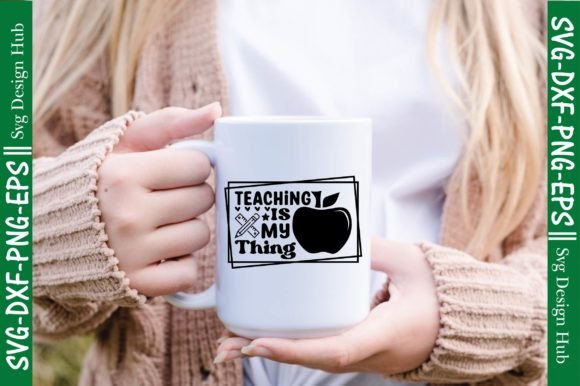
When I first opened the Teaching is My Thing Svg, Teacher Svg, the immediate impression was one of approachable professionalism. The layout balances bold typography with subtle decorative elements, creating a mood that is both authoritative and warm. For a teacher, this is crucial. It needs to look polished enough for a staff lounge but friendly enough for a classroom setting. The visual personality suggests a design that works best as a statement piece rather than a background accent. The shapes are distinct, which is a positive sign for embroidery, as overly intricate details often get lost in stitch density.
The theme is evergreen. While trends in education decor shift, the pride of teaching remains constant. This makes the Teacher Svg a reliable asset for any craft business looking to build a consistent catalog. It does not rely on fleeting memes or dated fonts, which increases its longevity as a design asset for Etsy sellers and boutique owners.
Real-World Application: The Tote Bag Test
To truly test the viability of this file, I simulated a common project: a custom canvas tote bag for a kindergarten teacher. Canvas is a forgiving fabric, but it has a distinct texture that can interfere with fine details. I imagined applying the Teaching is My Thing Svg, Teacher Svg using a combination of satin stitch for the borders and fill stitch for any larger graphic elements.
In this scenario, the design performed well because the lettering was substantial. Thin, wispy fonts often disappear into the weave of canvas, but the weight of this design ensured legibility. If you are creating a handmade product like this, the contrast between the thread and the fabric is key. A navy thread on natural canvas created a crisp, high-end look that elevated the perceived value of the finished product. It felt less like a hobbyist item and more like something you would find in a curated boutique.
Versatility Across Apparel and Home Decor
Beyond totes, this embroidery file shows promise across various substrates. For custom apparel, such as a fleece sweatshirt, the design acts as a perfect chest logo. The bulk of the stitches sits well on thicker fabrics without causing excessive puckering, provided you use the right stabilizer. However, when moving to thinner materials like a cotton t-shirt, caution is required. The stitch density must be managed carefully. If the original SVG is converted into a dense machine embroidery design without proper underlay or pull compensation, it can distort lightweight fabric.
I also considered its use in home decor, specifically pillow covers or kitchen towels. For a personalized gift, placing this design on a tea towel adds a charming, functional touch. Here, the running stitch might be preferable for finer details to keep the fabric soft and absorbent. The design’s adaptability makes it suitable for holiday embroidery projects, such as end-of-year appreciation gifts, where a quick yet meaningful token is needed.
Technical Considerations for Embroiderers
While the aesthetic is strong, the technical execution requires attention. Since the product description lists formats like SVG, PNG, EPS, and DXF, it is primarily a cut file bundle. This means if you are using it for commercial embroidery, you cannot simply load the SVG into your embroidery machine. You must digitize it first or ensure you have a compatible digital embroidery file format like PES or DST.
If you are digitizing this yourself, pay close attention to the corners of the letters. Sharp angles in vector graphics can result in thread bunching if not smoothed out in the digitizing software. Additionally, check the spacing between letters. In embroidery, threads have thickness. What looks like adequate kerning on a screen might merge together once stitched. Always run a test on scrap fabric identical to your final material. This allows you to adjust tension and hoop size before committing to the final garment.
Fabric and Hoop Constraints
There are specific scenarios where you should use this design carefully. On stretchy fabrics like jersey knits, a heavy fill can cause the garment to warp. Using a cut-away stabilizer is non-negotiable here. For curved surfaces like caps, the design’s width must fit within the standard cap frame, usually around 2.5 inches in height. If the Teacher Svg is too wide, it will distort around the curve of the hat. Always check the aspect ratio and scale it down if necessary for smaller embroidered patch applications.
Dark fabrics present another challenge. If the design includes fine outlines, ensure your thread colors provide sufficient contrast. A dark grey thread on a black shirt will vanish. In such cases, simplifying the design to solid fills or adding a white underlay can help the design pop. This is particularly important for small shop product consistency, where customers expect clear, readable text.
Enhancing Brand Value and Customer Trust
From a business perspective, the quality of your embroidery directly impacts customer trust. A clean, well-stitched Teaching is My Thing Svg, Teacher Svg signals professionalism. It tells the buyer that you care about the details. For Etsy sellers, this translates to better reviews and repeat business. When a teacher receives a sweatshirt embroidery piece that looks crisp and durable, they are more likely to recommend your shop to colleagues.
Furthermore, using versatile designs like this helps maintain brand consistency. You can use the same core design across different products—mugs (via sublimation using the PNG), shirts (via vinyl using the SVG), and jackets (via embroidery). This cross-platform utility maximizes the value of your purchase. It allows you to create cohesive printable mockup listings that show customers exactly how the design looks in various contexts, boosting buyer engagement.
Final Verdict and Practical Advice
The Teaching is My Thing Svg, Teacher Svg is a solid choice for designers and makers who understand the translation from screen to stitch. It offers a balanced aesthetic that appeals to the target market without being overly complex. However, success depends on your preparation.
- Test First: Always stitch out on scrap fabric to check density and registration.
- Check Licensing: Confirm whether the license allows for commercial use of finished physical items. Most SVG bundles do, but digital resale is typically prohibited.
- Digitize Wisely: If converting from SVG to embroidery, adjust pull compensation and add appropriate underlay stitches.
- Consider Fabric: Match the stitch type to the fabric weight. Use lighter stitches for thin materials and robust fills for heavy canvases.
In conclusion, this design serves as a reliable foundation for a variety of embroidery project types. Whether you are creating a baby embroidery item for a teacher’s child or a robust tote bag design for daily use, the key lies in thoughtful execution. By respecting the material constraints and focusing on stitch clarity, you can transform this digital asset into a high-value handmade product that stands out in a crowded market.